Jianchao Wang

Hangzhou, China
I am currently a Research Assistant (Visitor) at the School of Engineering, Westlake University, China, advised by Prof. Yuliang Xiu. I received my B.Eng. in Software Engineering from NUAA in 2023, and M.Eng. in Computer Science and Technology from NUAA in 2026.
🔍 Research Interests: Spatial Intelligence, World Model, 3D Gaussian Splatting, Feed-forward Reconstruction, Animatable Reconstruction/Generation, etc.
🚀 Open to Opportunities:
- Academic collaborations on 3D vision/generation, especially projects with publication potential
- Ph.D. opportunities in related areas, particularly positions aligned with my research interests
If you are interested in research collaboration or recruiting Ph.D. students in related areas, and are looking for someone with hands-on experience in PyTorch, multi-GPU training, and open-source development, please feel free to reach out: jcwang.goog@gmail.com.
news
| May 05, 2026 | Our paper “Frequency-Aware Optimization for Floating Artifact Removal in 3D Gaussian Splatting” is accepted by The Visual Computer (TVC). |
|---|---|
| Nov 24, 2025 | I am honored with the Open Source Contribution Award! |
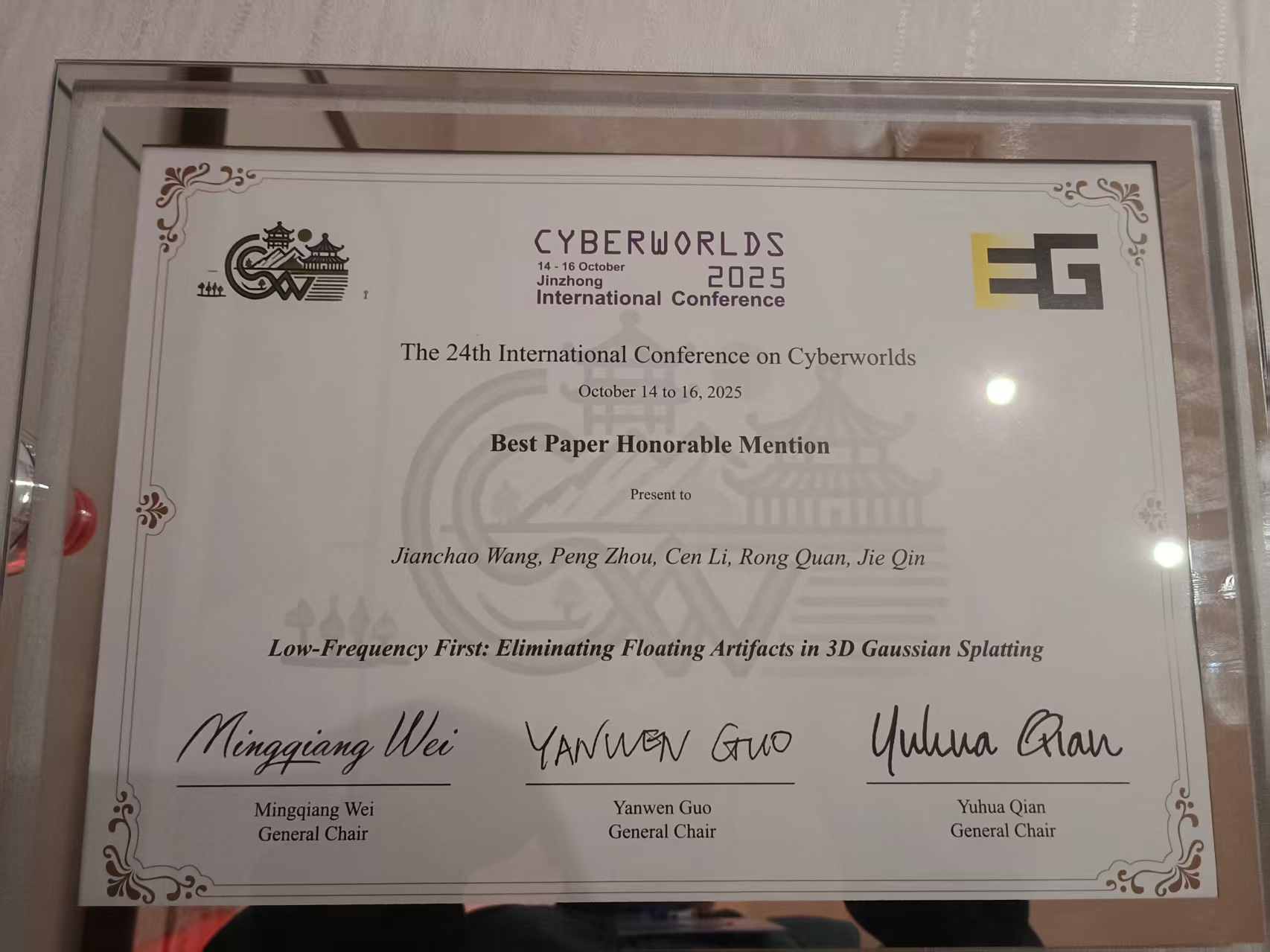
| Oct 16, 2025 | Our paper has received CW2025 Best Paper Honorable Mention! |
| Aug 11, 2025 | Our paper “Low-Frequency First: Eliminating Floating Artifacts in 3D Gaussian Splatting” is accepted by CW2025. |
selected publications
-
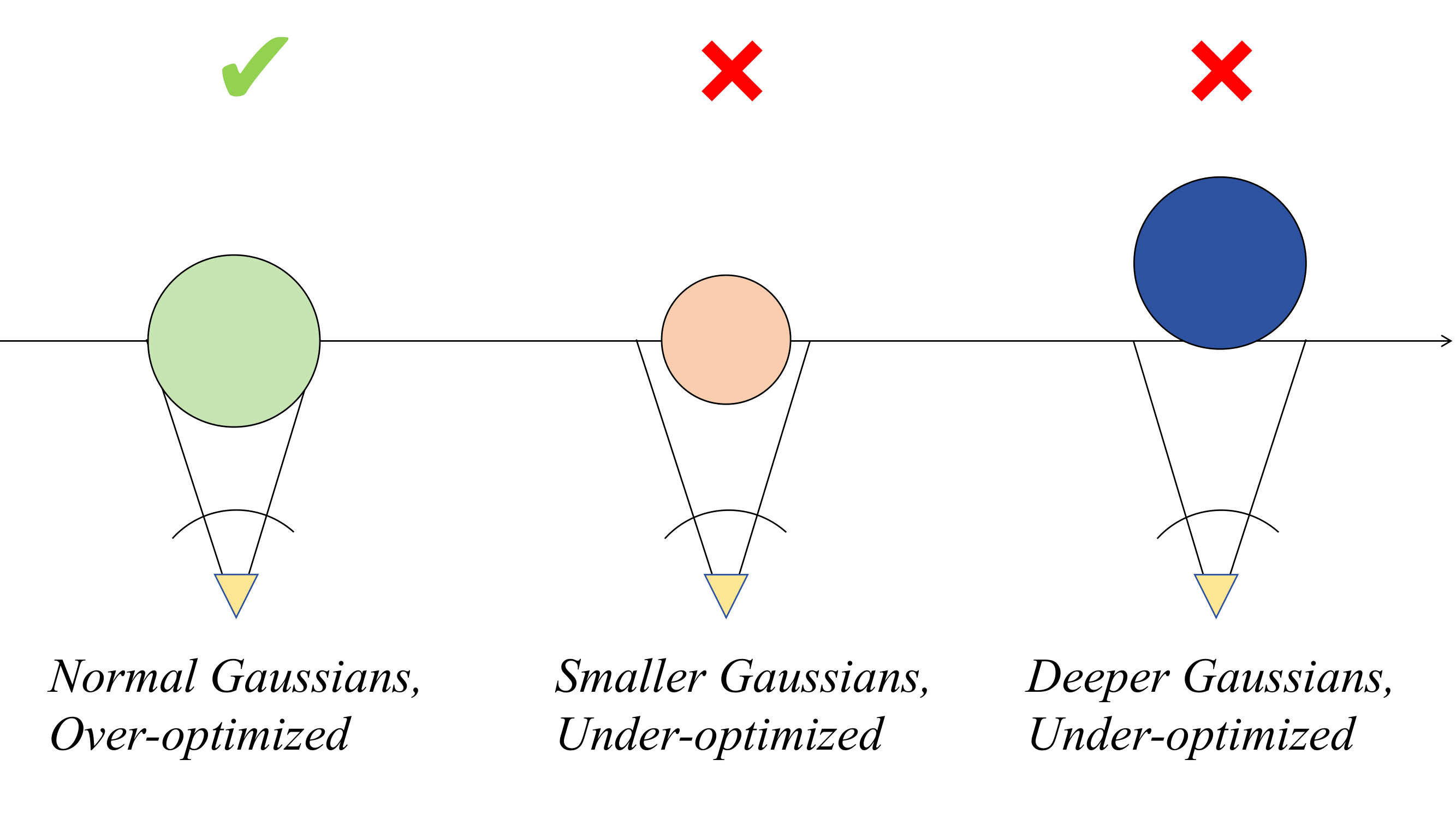 Low-Frequency First: Eliminating Floating Artifacts in 3D Gaussian SplattingIn Proceedings of the 24th International Conference on Cyberworlds, 2025